NATIVE
WAYS OF KNOWING
Experiences, Influences
and Transitions of
Tlingit Women Becoming Leaders
by
Barbara Fleek
Raven Moiety, Dry Bay Kwaan
L’uknax.adi (Coho) Clan, Xixch’ hit (Frog House)
|
Used
with permission from author for educational purposes only.
|
Alaskool Home | Women | Southeast
|
THESIS Presented to the Faculty of the School of Education University of Alaska Anchorage In Partial Fulfillment of the Requirements For the Degree of Master of Education in Adult Education Curriculum and Instruction Emphasis May 2000 |
Dedicated to the memory of:
Mom and Pop
Gilbert and Dennis Lundy (axkaak has)
Maria Joseph Miller (Ldaneit)
Evalee Azar
Beatrice Halkett
|
I wish to thank so many people who have supported and inspired me during this long journey—the thesis process. Dr. Gretchen Bersch, mentor, friend, and teacher.
Without her unfailing enthusiasm and confidence in my ability this thesis would not have been possible. Carole Lund, with whom I have shared so much, and who continues to encourage me. Her insight, helpfulness, and inspiration is immeasurable. My friend, supporter, and teacher from the beginning, Dr. Jeane Breinig. She exemplifies how we can be true to our tribal selves and still work in the academy with integrity. The four Tlingit women participants who shared their stories of lifelong learning and work. I am honored and humbled by their voices. To Evalee Azar who brought me into the folds of the Alaska Native Sisterhood and the Tlingit and Haida Tribes of Alaska as a young woman. She gave freely of herself to everyone and will always be missed. Her enthusiasm and joy of life was unparalleled. My Aunt, Maria Joseph Miller who accepted and loved me, taught me in her gentle ways and gave me a love for our People without shame. She also gave my daughters their Tlingit names before she left us. And, of course, my mother, Betty Durley, who never let her children know her fears while we were growing up. I acknowledge, understand, and value her strength, courage, and tenacity. I love you.
Most important, my daughters, Courtney, Susanne and Adrienne for their belief in me. Their encouragement, love and support during my undergraduate and graduate studies made this all possible and they teach me still. Gunalcheesh!
Based on historical and descriptive research, gender equality existed in both traditional and contemporary Tlingit society. Matrilineal descent (follows the mother) decided group membership, inheritance of wealth and leadership. The Tlingit society is divided into two matrilineal moieties, Raven and Eagle (Wolf). In traditional Tlingit culture, women enjoyed equality with their male counterparts. Women were active in the economy; they were autonomous, as evidenced by the fact that they stayed a member of their own clan after marriage; and they were influential, as educators, traders, and healers.
This qualitative study of four Tlingit women leaders addressed influences and challenges they faced while growing up and explored the factors that prompted their interest in social change. They ranged in ages from 55 to 65 years old. The researcher was interested in how these leaders emerged. Semi-structured interviews and the collection of a participant profiles were the techniques employed to gather the data. They recounted their family histories and reflected on experiences which influenced their development of voice, leadership, and cultural preservation. Specifically, the study focused on how the Tlingit women defined leadership, their early leadership experiences, opportunities and barriers, their role models and mentors, and their personal and social concerns.
The findings indicated that how and where the participants felt they belonged shaped their choices and fueled their life journeys. Tlingit women were acknowledged, recognized, and valued for their participation in all venues of their society.
INTRODUCTION
This is an ethnographic and historic study that examines Tlingit women leaders from a woman’s perspective, to expand our notions about leadership beyond "conventional" views. Grounded on the premise that knowledge is socially constructed, in that it is dependent on a social, cultural, and historical context, this researcher explored the experiences, influences, and leadership of four Tlingit women.
This researcher examined the history of Tlingit people, then examined the role these women played in cultural preservation, social movements, and politics. The roles of these women as active agents of change were investigated along with their discovery of self, voice, and mind.
The significance of this study is the fact that it is a study about contemporary, urban, educated Tlingit women who have been in leadership roles and positions all of their adult lives in a variety of organizations (Native and non-native.) These women are known and acknowledged in the Native communities for their leadership positions in the Alaska Native Brotherhood (ANB), Alaska Native Sisterhood (ANS), Sealaska, and the Tlingit and Haida Tribes of Alaska. There was little written about and almost no recognition of the roles Tlingit women played in ANB and ANS. Yet, women have been working since the ANB and ANS was formed in 1912 and 1915 respectively to address citizenship, equal rights, self-determination, education, Alaska Native civil rights, fishing rights, and land ownership. The women interviewed can trace their relative's involvement in ANB and ANS and the issues for which they fought. Their actions and behaviors developed into leadership succession, the process by which new leaders emerged to continue the work that others had started (Astin & Leland, 1991).
In 1929 the court in Ketchikan, Alaska affirmed the right of Native children to attend public schools. The court case was settled one year before Martin Luther King, Jr. was born, nearly thirty years prior to the 1954 Brown vs. the Board of Education decision. This great history is barely known or acknowledged within the State of Alaska. This history needs to be a part of every history class taught in our schools throughout the country.
Tlingit women have always been involved in the political struggles of the Alaska Native Brotherhood (ANB) and Alaska Native Sisterhood (ANS) for civil rights, integrated schools and public facilities, and a land-claims settlement. The development of Tlingit use of the legal system to achieve sociopolitical ends can be traced to Tillie Paul and her son, William L. Paul. The four Tlingit women participants have continued with the struggle to maintain subsistence hunting and fishing rights, and the sociopolitical struggle over allowing Native language and culture in schools.
The research confirms that in traditional culture and society, women exercised equitable power and influence. Tlingit society is matrilineal and women easily transferred leadership strengths, skills, experiences, and political power to the newly formed Alaska Native Brotherhood (ANB) and Alaska Native Sisterhood (ANS). The four women interviewed had grandparents, parents, uncles and aunts involved with ANB and ANS from its inception.
Traditional anthropological theory, as well as early feminist anthropological theory (Ortner, 1974; Rosaldo, 1974; Sacks, 1974 in Randolph, 1993) asserted gender asymmetry was a cultural universal. All cultures were assessed as male dominated to some extent, though hunter and gatherer societies often to a lesser degree than modern industrialized nations. However, a growing number of anthropologists (Ackerman, 1981; Leacock, 1978; Schlegel, 1986 in Randolph, 1993) suggested the existence of different ideologies of gender roles and relations. They introduced new theories arguing that, in many societies, women enjoyed equal status and power with men.
Malcolm Knowles (1975) characterized self-directed learning as "critical to survival and prosperity" in todays changing world, and adult educator Stephen Brookfield (1997) stated that being in control of ones learning meant that one made informed choices. Making informed choices meant, in turn, that one acted reflectively in ways that furthered one’s interests. From its inception, the Alaska Native Brotherhood (ANB) and the Alaska Native Sisterhood (ANS) addressed political issues and concerns. First, they recognized that the legal/legislative process was the only viable vehicle for resolution of Native/White conflicts. The second was that education – through formal institutions, rather than the Native one – was the key to accomplishing the first goal.
To shape their own future, the Tlingit took it upon themselves to present the concept of the learning organization necessary for their survival. Peter Senge (1990a) viewed leaders as designers, stewards, and teachers. Tlingits were responsible for building organizations where people continually expanded their capabilities to create the results they truly desired. The essence of a leader’s work lies precisely in the art of mobilizing the resources of every individual in the organization, not in extracting ideas from leaders and putting them into the hands of the people. Learning organization theory denies the old model, ‘the top thinks and the local acts.’
Senge (1990a) characterizes leaders as being able to acquire necessary skills or competencies for the learning organization. Those disciplines are shared vision; personal mastery; mental models; team learning; and systems thinking. Those learning disciplines are also called "the leadership discipline" (p. 359). The learning organization for the Tlingit was the Alaska Native Brotherhood (ANB) and Alaska Native Sisterhood (ANS).
Given the traditional status of Tlingit women, the impact of Western cultures, and the Tlingit activities addressing Alaska Native civil rights and education, this study focused on the following questions:
Anyeti. Tlingit nobles or aristocracy.
Celebration. A great biannual gathering of clans from Southeast Alaska and other parts of the world held the first weekend of June in Juneau, Alaska to perpetuate the cultures.
Clan. The principal social unit of tribal organization, in which descent was reckoned exclusively in either the paternal or maternal line.
Exogamy. Marriage outside a specific tribe or social unit.
Kuskdaka. Land Otter man.
Leadership Succession. The process by which new leaders emerge to continue the work that others have started (Astin & Leland, 1991).
Matrilineal. Inheriting or determining descent through the female line.
Moiety. One of two units into which a tribe was divided on the basis of unilineal descent.
Mount Edgecumbe. A boarding high school for Native children opened in 1947 at Sitka.
Native. Native with a capital "N" is specific to the Alaska Native indigenous peoples. Native with a small "n" is used for people who may have lived in Alaska for a period of time but are not "Alaska Native."
Promyshlenniki. Russian Siberian fur hunters.
Robert’s Rules of Order. The authority on parliamentary law for both the grand and the subordinate Alaska Native Brotherhood and Alaska Native Sisterhood camps.
Russian-American Company. A charter granted by Czar Paul I in 1799 to the heirs of Gregory Shelikov and headed by Alexander Baranov giving exclusive commercial enterprise and governing power in Russian America (Gruening, 1954).
Self-Directed Learning. Informal learning in which learners choose to assume primary responsibility for planning, carrying out, and evaluating their learning experiences (Merriam & Caffarella, 1991).
REVIEW OF RELATED LITERATURE
American Indian women have been a part of the storytelling tradition—both oral and written—from its inception, passing on stories to their children and using the word to advance those concepts crucial to cultural survival. Dexter Fisher (ed., 1980) The Third Woman
The review of literature was developed in four parts and supported with both historical and contemporary descriptive research. First, the literature outlined the status of Tlingit women in traditional culture and the impact of contact with Western cultures on that status. Secondly, it examined the formulation of the Alaska Native influences, primarily the Alaska Native Brotherhood (ANB) and Alaska Native Sisterhood (ANS), the first organizations in the United States to address Alaska Native civil rights and education. Using religious organization structure, the ANB and ANS embarked on programs of self-directed learning (Lowry, 1989) to improve their status in their own land. Third, it reviewed pertinent leadership literature.
Social organization among the Tlingit was the most formal and structured of any Alaska Native group (Langdon, 1993). The Tlingit were grouped into two exogamous matrilineal moieties. Totemic animals, Raven and Eagle (Wolf) represent the Tlingit moieties. A moiety as such was not a social group. It had no organization of its own, but it was simply an arrangement for regulating the relationships between people, because it placed the clans on one side or the other (De Laguna, 1972, 1990; Klein, 1975; Langdon, 1993). The societies were exogamous so that only Eagle-Raven marriages were allowed. Traditionally to marry within one’s moiety was regarded as incestuous. Beyond that, it was the clans that were primary units of social organization. (DeLaguna, 1972).
Tlingits were born into matrilineal clans, totemic corporate groups that traced their origins from mythical or legendary incidents. The clans originally took their names from an animal or mythical being. Matrilineal descent determined group membership, inheritance of leadership and wealth. Clans, and under them the clan houses, were the crucial units in Tlingit society since they held ownership to property—houses, fishing and hunting grounds, gathering areas, canoes, crests, ceremonial garments, dances, songs and stories (De Laguna, 1990; Langdon, 1993).
Children were members of their mother’s clan and received most of their education from these kinspeople. At seven years of age, a boy went to stay with his mother’s brother. During this time he was put through a rigorous training, both physical and mental. They were taught manners, customs, and the history of the clan and observed the domestic activities of the older men. The boys spent time with men who specialized in whatever craft they had aptitude for and an interest in learning, be it hunting, carving, or shamanism. The house chief introduced his successor to visitors so that he would get to know the important clans and leading people of the society. Special evenings were set aside for the telling of myths, and for the explanation of sacred clan symbols (Oberg, 1973).
Girls remained with their parents until they were married. They also received thorough training in clan regulations, customs, and myths. At puberty, every girl went through a period of seclusion that could last from four months up to a full year. During this period the initiate observed strict food and social taboos and was instructed in the ways of the clan, its importance and history, to reinforce the identity and responsibilities associated with her rank. After her seclusion, a potlatch was given by her clan house to present her to the community (Oberg, 1973).
Storytelling was an integral part of passing on the values, history, and worldview of the Tlingit (Klein, 1975). The first person a child heard myths from was his or her grandmother. When the young boys went to live with their maternal uncles, it was the uncles’ duty to continue to reinforce these stories in the boys’ minds. Finally, the public occasion where stories were told was at the potlatch. Eloquent speeches by important people (both men and women) were an important part of the potlatch.
Traditional Tlingit social structure created a society in which gender equality existed. Several factors were involved in the reinforcement of this equality including the matrilineal descent system, marriage patterns, and individual determination of rank. (Kottak, 1991). Even though the parents arranged marriages, a woman could refuse an offer.
Property concepts were highly developed and respected in Tlingit society (Klein, 1975; Krause, 1956; Oberg, 1973). Wealth was necessary to both confirm high status and to elevate status. The various ranks of the Tlingit were the nobles or aristocracy (anyeti), the commoners, and the slaves. Members of the anyeti were the leaders of the clans and clan houses and held clan property in trust for the rest of the group. "In speaking of persons of high social position, what my informants stressed was the respect felt for them: respect, which depended upon birth, wealth, age, and conduct (De Laguna, 1972). Krause (1956) concurred, stating that the "so-called aristocracy does not possess any particular privileges except the high esteem in which they are held by their tribesmen" (p. 84).
Potlatches were one of the hallmarks of Tlingit, and other Northwest Coast, cultures (Klein, 1975). They were usually given in the fall and winter months since the spring and summer were filled with intense subsistence activity. Potlatches were staged with great pomp and attention to protocol. A potlatch could be given for many occasions; the most frequent was to honor a deceased person and to repay the opposite moiety for handling all the funeral arrangements and care of the body. Other occasions for potlatches were naming ceremonies, weddings, house-raising ceremonies, raising special totem poles and eradicating shameful or embarrassing incidents (Langdon, 1993).
The political structure of the Tlingit was informal. Internal ad hoc councils of clanspeople, both male and female resolved disagreements and other conflicts with the local clan. Between clans, conflict was resolved through negotiation by clan representatives, usually highly ranked clan leaders (Klein, 1975).
Both men and women could be shaman, the most powerful person in his or her own lineage or clan. Shaman had many capabilities, including the ability to cure illnesses, control the weather, bring success in war or hunting, send his or her spirit to communicate with colleagues in distant areas or bring back news, foretell the future, rescue and restore those captured by Land Otter men (kushdaka), expose evil-doers, and make awe-inspiring displays of power (De Laguna, 1990).
The Western educational experience of Alaska Natives began in 1741 when the Russian explorers Vitus Bering and Chirikof made the first recorded contacts (Culley, 1970). The loss of sixteen men by Chirikof in a skirmish with Tlingits near present-day Sitka must have been educational for both parties, and it set the tone for Russian/Native relations for the next 126 years.
The Czar’s eastward expansion of the Russian Empire to Alaska was the result of two major factors. First, by the 1700’s, the colonial expansion of European nations in the Pacific Basin determined the geographical importance of Alaska as a link between America and Asia. Second, the Russian promyshlenniki, Siberian fur hunters, received reports of large numbers of fur-bearing mammals in the region (Hinkley, 1972).
The Russians eventually recognized that the improvement of relations between the Russians and the Alaska Natives would increase economic returns, so the task of bringing order between the two cultures was assigned to the missionaries of the Russian Orthodox Church. Through education and conversion in schools provided by the Russian American Company and staffed by the Church, it was believed that greater profits would result because of a decreased level of hostility between the Russians and the Alaska Natives (Ray, 1959).
I like your stuff, Frost, but I often wish you’d stuck to maple trees. The gift outright, but yet not quite: hence the Organic Act of 1884 so Whites could take and transfer title to their claims; the Homestead Act of ’98, so squatters’deeds got recognized; the Indian Allotment Act of 1906 let Tlingits claim whatever land was left. The Indians made citizens in 1924. An Act (December 18, 1971) Alaska Native Claims Settlement Act, making Alaska Natives into profit making corporations. The land was theirs before they were the land’s. And parenthetically, the deed of gift was many deeds of war. (And we all know what happens to women when you lose a war: you’re lucky to keep matrilineal descent, and children of the father’s clan.) Dauenhauer (ed., 1980) Glacier Bay Concerto
When sovereignty of Alaska was transferred to American rule in 1867, Alaska Natives who had been recognized as citizens of the Russian Empire assumed they would, as the treaty guaranteed them, automatically receive American citizenship. Unfortunately, the wording of the Treaty of Sale insured that "civilized tribes" would be accorded the rights of citizens of the United States, but listed no clear criteria for defining "civilized." Alaska Natives in the first Territorial capital, Sitka, were the first to protest when their legitimate civil, property, and religious rights were violated by officials appointed by the United States federal government (Dauenhauer & Dauenhauer, 1994).
History of Schooling for Alaska Natives
With only minor exceptions the history of Indian education has been primarily the transmission of white American education, little altered, to the Indian child as a one-way process. The institution of the school is one that was imposed and controlled by non-Indian society…its goals primarily aimed at removing the child from his aboriginal culture and assimilating him into the dominant white culture. Estelle Fuchs and Robert J. Havighurst (ed. 1973) To Live on this Earth
Morgan (1979) noted early efforts by Russia to establish schools for Native children. By 1840 the number of schools for Native children in the Russian colony had grown to four for 100 boys and four for an undisclosed number of girls (p. 286- 288).
Formal education was combined with Christian missionization among the Indians in the 1870’s. Philip MacKay, a Tsimshian, inaugurated Protestant missionization at Ft. Wrangell about 1876. Word of this reached various religious organizations in the States, and in 1877, Mrs. Amanda McFarland, recruited by the Presbyterian Board of Home Missions, established a girls’ school at Wrangell (Drucker, 1958).
The year 1884 marked two major developments for Alaska Native education. First, Sheldon Jackson, a Presbyterian minister, educator, and founder of the mission school at Sitka was appointed General Agent for Education in Alaska. Second, the United States Congress passed the first Organic Act (Hinckley, 1966) for Alaska, which appropriated $25,000 and required the Secretary of the Interior to use the funds as necessary to "make needful and proper provision for the education of the children of school age in the territory of Alaska, without reference to race, until such time as permanent provisions shall be made for the same" (p. 742-43).
Not until 1905, with the passage of the Nelson Act, did Alaska see the establishment of compulsory-attendance public schools (Naske, 1973). The Act provided that incorporated towns could organize and manage their own schools. Further, it established that any community outside of an incorporated town having a school population of at least 20 "white children and children of mixed blood who lead a civilized life" could petition the clerk of the court for the establishment of a school district. The Nelson Act also stated:
[T]he education of Eskimos and Indians in Alaska shall remain under the control and direction of the Secretary of the Interior, and schools for and among the Eskimos and Indians of Alaska shall be provided by an annual appropriation and they shall be permitted to any Indian boarding school. (Nichols, 1986, p. 218-220)
With the passage of the second Organic Act, creating the territorial legislature, Alaska now had two school systems, as was the case in the United States. One system existed for Whites and children of mixed blood while a separate one operated for Eskimos and Indians. In 1917 the territorial legislature was granted control over the school systems for Whites and children of mixed blood, while the Federal Bureau of Education operated the schools for Natives. From 1912 to 1931, the year that the U. S. Bureau of Education transferred responsibility for education of Alaska Native children to the Bureau of Indian Affairs, approximately 5000 Alaska Native students passed through Federal schools in Alaska (Hinckley, 1972).
Mantz (1953) in her study of secondary and higher education in Alaska noted that by the 1940s Alaska Natives began to push for the abolishment of the dual system of education. They also questioned shipping their children off to boarding schools located great distances from their home villages or even to locations in the contiguous states.
It will be much cheaper to spend a few thousand dollars in now educating (Alaska Natives) to citizenship, than a few years hence millions to fight them, when the encroachments of the whites shall drive them to desperation. Sheldon Jackson (1880) Alaska, and Missions of the North Pacific Coast
After visiting Russian America in 1818, the Russian sea captain Vasilii Golovin complained that, although many Natives on Kodiak Island spoke some Russian, they had no understanding of the teachings of the church. Forty-three years later, the situation was the same with the Tlingit Indians. In Golovin’s view, the Russian Orthodox Church had failed in its mission—not because of its message but because of its tactics. "It is no wonder," he reported in 1861, "that [the Natives] are not convinced of the superiority of the Christian faith, for not one of the missionaries in the colonies has the slightest knowledge of their language, and, consequently, cannot converse with them" (Mitchell, 1997, p. 66).
Golovin’s solution to the problem was the same as Sheldon Jackson’s. Before Alaska Natives could be converted, they had to be educated. Golivin’s (Mitchell, 1997) recognition that "influenc[ing] the upbringing of [Native] children" was the key to persuading the next generation of Alaska Natives to accept the Russian Orthodox faith placed his view of the matter in the mainstream of contemporary educational theory. As John Dewey, America’s preeminent theoretician of the philosophy of education, long ago observed, children are the "future sole representatives" of the social group of which their parents are members. For that reason, if the older members do not communicate—or are prevented from communicating—their "ideals, hopes, expectations, standards, and opinions" to their children, the cultural life of the group will die with the older members. For Dewey, "education, and education alone, spans the gap" between every society’s young and old (Mitchell, 1997, p. 67).
Under the direction of Sheldon Jackson, the schools run by the American missions endeavored to eradicate the Native languages and replace them with English. Students were forbidden to speak their Native language and were often harshly penalized if the rule was broken. There was also an effort to abolish traditional Native cultural practices, potlatches, the kinship system (since matrilineal discouraged the "Christian father role" and community houses, "since communal houses encouraged matrilineal and were considered unhealthy") and, of course, traditional religious beliefs and healing practices which were in direct conflict with Christian religious views (Klein, 1980, p. 101). Langdon (1993) asserted, "Jackson’s ideas and efforts established a powerful template in the minds of non-natives and many Natives for how cultural change and development should proceed for Alaska Natives" (p. 90).
Andy Hope (1991) Haa Kusteeyi, Our Culture Tlingit Life Stories
Alaska Native Brotherhood and the Alaska Native Sisterhood
In 1912, a group of twelve Orthodox and Presbyterian Native men and one woman founded the Alaska Native Brotherhood (ANB), the oldest Indian organization in the United States to promote the "civilization," and therefore the citizenship and equality of American Indians. The Alaska Native Sisterhood (ANS) was founded for similar purposes three years later (Dauenhauer & Dauenhauer 1994).
In 1915 the Second Alaska Territorial Legislature enacted legislation that allowed Natives to become citizens if they severed tribal relationships, adopted the habits of civilization, passed an examination given by town teachers, obtained an endorsement from five White residents, and satisfied the district judge (Arnold, 1978).
Dauenhauer and Dauenhauer (1994) pointed out that most Alaska Native Brotherhood historians (Drucker,1958; Haycox, 1989) emphasized the Presbyterian heritage of the organization. This connection was important and undeniable, but equally so was the Orthodox heritage documented by Kan (1985) who presented a detailed analysis of a successful attempt by the Tlingit to take advantage of the church brotherhoods established in the late 1890s and early 1900s by Russian Orthodox missionaries. Unlike the Presbyterian, the Orthodox brotherhoods were bilingual. The founding documents still exist for the "Society of Temperance and Mutual Aid of St. Michael the Archangel," organized in Sitka on January 1, 1896. The regulations were handwritten in Tlingit and Russian. Tlingit was written in the Cyrillic alphabet. The document listed eighteen men and women, giving their Christian baptismal names followed by their Tlingit names. Use of both names was common in the Orthodox records of the period.
The Dawes Act (1887) had made provisions for citizenship for Native Americans provided that those Native Americans "severed tribal relationships and adopted the habits of civilization" (Arnold, 1978, p. 83). This national policy necessitated the inclusion of two related items into the Alaska Native Brotherhood and Alaska Native Sisterhood agenda: education for themselves and abandonment of aboriginal customs which were seen by whites as uncivilized.
From its inception, The Alaska Native Brotherhood (ANB) and Alaska Native Sisterhood (ANS) addressed political issues and concerns. In 1924, William Paul, the first Tlingit attorney and an active member of ANB was elected to the Territorial legislature, making him the first Alaska Native to serve in that body. He successfully defended Charlie Jones (U.S. v. Charlie Jones, 1923) to test the issue of whether Indians could vote. This was a great victory for William Paul and Alaska Natives. The significance of the case was superseded, however, when, in 1924, the U.S. Congress passed the Indian Citizenship Act, making citizens of all Indians not already so (Dauenhauer & Dauenhauer, 1994). In 1928 William Paul returned to the question of school desegregation. The Bureau of Education school at Ketchikan did not have sufficient students, and the white school barred some Indian children who had been attending there in order to increase the number for the government school. The children’s parents asked Paul to sue, and he won the case (Estus and Choate, 1983).
Dauenhauer and Dauenhauer (1994) addressed the Convention on the Alaska Native Brotherhood and Alaska Native Sisterhood Convention at Haines, Alaska in 1929. This Convention was of enormous historical significance in the battle for Native land rights. The convention formally took the position that the Alaska Native Brotherhood and the Alaska Native Sisterhood would pursue a determination of Native land rights, and it hired attorneys specifically for that purpose. The passage of legislation by Congress in 1935, authorizing the U.S. Court of Claims to hear a Tlingit and Haida land suit, was a natural progression of events following the 1929 convention. The Court of Claims decisions in 1959 and 1968 in favor of the Tlingit and Haida people, and the congressional appropriation of a final cash settlement in 1970 arose from that legislation.
The Alaska Native Brotherhood (ANB), supported by the Alaska Native Sisterhood (ANS), could point to a long list of accomplishments furthering the political, social, and economic status of Alaska Natives. In 1977, Dr. Walter A. Soboleff, ANB Grand President, noted that the ANB and ANS had among other things:
lobbied for passage of [the] State Racial discrimination bill; gained recognition of Natives to vote; integrated public schools; extended workmen’s compensation laws to cover all; included Natives [in] aid-to-dependent children; secured relief for aged Natives; brought [the] IRA act to Alaska; brought hospitals for Natives to Alaska; in a time of great need encouraged establishment of boarding schools and further education for our youth; initiated [the] Tlingit and Haida land suit, and encouraged Native involvement in State and Federal Government. (Case, 1984, p. 409)
Eagle Moiety, Keet Gooshi Hit (Killer Whale Dorsal Fin House)
DOB: 1886 – DOD: 12/05/18
Marie’s mother was killed when she was a child in Klukwan and she was educated by the Quaker missionaries in Juneau, and eventually graduated from Carlisle Indian School in Pennsylvania. When she returned home Marie was active as a court interpreter and as an organist for the Presbyterian Church.
She opposed segregated schools, and as a property owner and taxpayer, fought to have her children attend the Juneau public school. Marie was conscious of the social problems and ill treatment experienced by Native people and worked to create a Christian atmosphere and a moral social organization that would help Natives develop themselves in a changing Alaska.
Her most lasting achievement was helping to organize the Alaska Native Brotherhood (ANB) in 1912. She was called upon to be the first Recording Secretary of the ANB, not only because of her skill in writing, but because she shared the same concerns as the founding brothers. She served in that position in the formative and organizational years of the ANB (Dauenhauer & Dauenhauer, 1994).
Matilda (Tillie) Kinnon Paul Tamaree
Raven Moiety
DOB: 01/18/1863 – DOD: 08/20/55
Tillie attended Mrs. McFarland’s Home and School for Girls in Wrangell. She married Louis Paul at sixteen years of age and they started their young married life as Indian Christian teachers in Klukwan. Her husband died leaving her with three young sons. Sheldon Jackson invited her to join the staff at the Training School in Sitka. Over the years (about 17) at Sheldon Jackson School (formerly called the Training School), Tillie was often called on as a peacemaker when conflict arose between Tlingit clans or within the church. She also became a liaison and spokesperson between her Native people and the newly introduced Caucasian culture.
Tillie Paul and George Beck (another Sheldon Jackson School staff member) started a temperance organization which grew into the New Covenant Legion, which contributed to the formation of the Alaska Native Brotherhood (ANB) and Alaska Native Sisterhood (ANS).
At the request of the Presbyterian Church, she moved to Wrangell where she and Charles Jones were indicted by the Grand Jury – he for voting illegally and she for aiding and abetting illegal voting. The case was tried in Ketchikan and William Paul, Tillie Paul's second son, defended Charles Jones. Jones was acquitted, and the District Attorney dropped the case against Tillie Paul (Davis, 1931).
Through this action, Tillie Paul entered the rolls of early civil rights activists in Alaska, and her son, William Paul, became publicly engaged in the first of many legal suits over the rights of Alaska Native people. Dauenhauer and Dauenhauer, (1994) noted that Tillie remained active in church work and was assertive regarding the position of women in the Church.
Elizabeth Wanamaker Peratrovich
Raven Moiety, Lukaax.adi Clan
DOB: 07/04/11 – DOD: 12/01/58
Elizabeth graduated from Ketchikan High School and attended Sheldon Jackson College in Sitka. She furthered her studies at Western College of Education in Bellingham, Washington where she met and married Roy Peratrovich in 1931.
Dauenhauer and Dauenhauer (1994) said that when Elizabeth and Roy moved to Juneau from Klawock in 1941, she was appalled by the blatant discrimination she encountered. Elizabeth and Roy jointly wrote to Territorial Governor Ernest Gruening in that same year, on Alaska Native Brotherhood letterhead, complaining about the "No Natives" signs in local establishments, mentioning that "all freedom loving people in our country were horrified" when signs declaring "No Jews Allowed" appeared in Germany, yet the same discrimination "is being practiced in our country" (p. 533).
In 1943, the Territorial Legislature considered the Anti-Discrimination Act for the first time. Roy and Elizabeth Peratrovich lobbied daily for its passage. The testimony on the floor of the Senate was overwhelmingly negative, with legislators claiming that Indians had not yet reached a sufficiently high level of culture to be considered a civilized people. The Alaska Territorial Legislature met only every other year in those days, so it was 1945 before the bill could be reconsidered. For the next two years the Alaska Native Brotherhood and Alaska Native Sisterhood members gathered texts of similar laws from other parts of the country and compared these with the draft of the proposed Alaskan law.
When floor debate on the measure began this time, Roy and Elizabeth were in attendance daily. Citizens at that time could address the assembly directly and testify during the sessions. Elizabeth did, and it was her final oratorical duel with Senator Shattuck that won the day. An Anti-Discrimination Act was passed on February 8, 1945 which outlawed discrimination in housing, public accommodations, and restaurants in Alaska. This was the first anti-discrimination law in the nation, about twenty years before the civil rights movement accomplished the same in the "lower 48" (Dauenhauer & Dauenhauer, 1994).
Oleksa (1991) noted that Elizabeth remained active in Native American affairs, serving as the Alaskan representative to the National Congress of American Indians.
Central Council of Tlingit and Haida Indian Tribes of Alaska
The Central Council of Tlingit and Haida Indian Tribes of Alaska (CCTHITA) was a direct offshoot of the Alaska Native Brotherhood (ANB) and Alaska Native Sisterhood (ANS) the oldest of Alaska Native organizations. The CCTHITA was formed in response to an Act of Congress of June 19, 1935, which authorized it to bring suit in the U.S. Court of Claims for compensation for the prior loss of their aboriginal lands. The ANB and ANS, well established in southeastern Alaska, included members from other tribes and non-natives in their membership, which made it ineligible to press the land claims suit.
Through the Alaska Native Brotherhood (ANB), Alaska Native Sisterhood (ANS), and the Central Council of Tlingit and Haida Indian Tribes of Alaska (CCTHITA), people forged strong alliances, acquired and developed skills, defined objectives and goals, altered their relations with non-native agencies and individuals, and moved into the national political arena to lobby for settlement of claims (Estus & Choate, 1983).
The sole function of the Central Council of Tlingit and Haida Indian Tribes of Alaska (CCTHITA) was to bring suit against the United States for aboriginal claims. The court declared that the government was guilty of failing to protect the rights of the Indians from white settlers, miners, and other developers. The court also found that Indian title survived to two and one-half million acres of land in Tlingit territory.
The Tlingit and Haida valued the land that had been taken from them at $80 million, but the government valued it at $3 million. The commissioner appointed by the court estimated the land to be worth $16 million that represented 43 cents an acre. William Paul noted that the value of the timber alone sold from their forests totaled over $600 million and recommended an appeal, but in 1968 the Central Council of Tlingit and Haida Indian Tribes of Alaska accepted the award (Worl, 1980, p. 210).
The Alaska Native Brotherhood (ANB) leadership experience would prove to be a significant factor when, in 1966, the Alaska Federation of Natives (AFN) was founded in response to the growing threat from the State of Alaska to Native land and resources. Tlingit and Haida leaders contributed significantly to the successful development of AFN and the settlement of the Alaska Native Claims Settlement Act of 1971 (Arnold, 1978).
The Central Council of Tlingit and Haida Indian Tribes of Alaska (CCTHITA) joined with other Alaska Native groups to form the Alaska Federation of Natives (AFN) to pursue the settlement of their remaining claims against the United States. In December 1971 Congress passed the Alaska Native Claims Settlement Act (85 U.S. Stat. 688). Under its terms, 12 regional profit-making corporations and 224 village corporations were created. The Act extinguished aboriginal title to Alaska and conveyed fee simple title to 44 million acres to the corporations although the Alaska National Interest Lands Conservation Act of 1980 (ANILCA) was intended to carry out the subsistence related policies and fulfill the purposes of ANCSA (Case, 1984). Individual Natives who were alive on the date of passage of the Act and who could establish that they were at least one-quarter-blood Native were enrolled as shareholders in the corporation (Case, 1984).
[Leadership] takes place when a certain combination of elements come together, where something needs to be done and enough people want to do it, and there’s the right combination of the people that have the ideas and the people who understand the process….Leadership you learn by being able to put together that right combination of things that people are doing what they want to do. –Instigator (1991) Women of Influence, Women of Vision
Stephen Brookfield (1997) stated that at the heart of a strong, participatory democracy was citizens’ capacity to question the actions, justifications, and decisions of political leaders, and the capacity to imagine alternatives that were fair and compassionate than current structures and moralities. Such capacities develop as one learned to think critically. Encouraging critical thinking in adults was therefore integral to the democratic project. Critical thinking seemed to hold the promise of constituting a universal theory of adult learning and, by implication, a template for adult education practice.
According to Astin and Leland (1991), leadership manifests itself through activity aimed at bringing about change in an organization or institution or social system in order to improve people’s lives. While to manage is to ensure that the system functions at its optimum level, leadership as a creative process results in change.
Kouzes and Posner (1995) described leadership as the art of mobilizing others to want to struggle for shared aspirations. Leaders must appreciate and articulate a shared vision of the future.
John Kotter (1988) offered a useful perspective on the concept of leadership: "The word ‘leadership’ is used in two basic ways in everyday conversation: (1) to refer to the process of moving a group (or groups) of people in some direction through (mostly) non-coercive means, and (2) to refer to people who are in roles where leadership (the first definition) is expected" (p. 16). In normal conversation, the second definition is most common.
Coyhis (1993) described a traditional Indian Values vs. Non-Indian Values model of leadership. One style of leadership was about dominance and control and power. The elders said leadership was about service. The leader looked for the good of the whole. While corporate America seemed to function on power plays and issues of control, Coyhis, as shown in Table 1, offered a positive alternative. By using traditional values in non-Indian organizations and starting with a base rather than "at the top," (p. 23) the reader could see how cooperation proved a more effective means than competition.
Traditional Indian Values vs. Non-Indian Values
|
Traditional
Indian Values
|
Non-Indian
Values
|
|
Cooperation
|
Competition
|
|
Group emphasis
|
Individual
emphasis
|
|
Modesty
|
Self-attention
|
|
Passive
|
Active
|
|
Patience
|
Aggressiveness
|
|
Generosity/sharing
|
Saving
|
|
Non-materialistic
|
Materialistic
|
|
Work for
current need
|
Work for
the sake of work
|
|
Time always
with us
|
Use every
minute
|
|
Orientation
to present
|
Orientation
to future
|
|
Pragmatic
|
Theoretical
|
|
Respect
for age
|
Respect
for youth
|
|
Harmony
with nature
|
Conquest
over nature
|
|
Spiritual/mystical
|
Skeptical
|
|
Non-verbal
|
Verbal
|
|
Religion
as a way of life
|
Religion
as a segment of life
|
|
Indirect
criticism
|
Direct
criticism
|
|
Extended
family important
|
Nuclear
family important
|
| Note. From "Servant Leadership," by Don Coyhis, 1993, Winds of Change, (Spring) 1993, p. 23. |
Kouzes and Posner (1995) shared the following practices that emerged from personal best leadership cases: "challenging the process, inspiring a shared vision, enabling others to act, modeling the way, and encouraging the heart" (p. 19). The portrayal could be complete and vivid only when constituents saw their own views represented, because leadership was a reciprocal process between those who chose to lead and those who chose to follow.
Caffarella (1992) found that the predominant paradigm of leadership, as with learning and teaching in adulthood, was that women’s leadership styles and actions were grounded in male models and women were assessed against these ideas of leadership. Until recently, voices of women leaders as well as women learners were not heard, nor has literature on women’s development been viewed as salient when describing foundations of leadership practice.
Women leaders, in both the public and private sectors, saw being involved with the people with whom they work as critically important —"on keeping relationships in the organization in good repair" (Helgesen, 1990, p.21). This theme of the centrality of relationships to women’s roles as leaders was seen in the values these women espoused, their leadership styles, and in action strategies they described.
Most women seemed to place a premium on articulated values as fundamental to their work. Although different authors used varying terminology to describe these basic values, strong threads are seen among these writers related to the developmental theme of relationships, with particular emphasis given to the values of caring, responsibility to others, empowerment, interdependence, collaboration, and collegiality (Astin & Leland, 1991; Billing & Alvesson, 1989; Blackmore, 1989; Helgesen, 1990). One way for leaders to implement these and other basic values in an organization was to formulate belief statements, as shown in Table 2, that reflected the agreed-upon values of the people throughout the organization. These belief statements could then serve as the lens through which the daily business of the organization was carried out.
Examples of Organizational Belief Statement
|
Value
|
Belief
Statement
|
|
Caring
|
Being caring people drives our leadership behavior. |
|
Responsibility
to Others
|
Being responsible to others forms the basis of our work. |
|
Empowerment
|
Empowering others to think and act is primary to our decision making actions. |
|
Interdependency
|
Fostering interdependence, the ability to work with and through others, forms the cornerstone of our interactions. |
|
Collegiality/Collaboration
|
Acting in a collegial and collaborative manner is fundamental to the functioning of our organization. |
| Note. From "Linking This Literature to the Practice of Leadership," by Rosemary S. Caffarella, 1992, Psychosocial Development of Women: Linkages to Teaching and Leadership in Adult Education, p. 34. ERIC Clearinghouse on Adult, Career, and Vocational Education, Columbus: Ohio State University. |
These values were carried through in the style of leadership many women tended to adopt. The predominant words that described this style were participatory management with collective action as the goal (Astin & Leland, 1991; Iannello, 1992; Shakeshaft, 1989). This meant high involvement by the leader with various constituent groups. Carrying through this style of high involvement had "the theme of [fostering] connections between people, between people and ideas, and between people and policy" (Blackmore, 1989, p. 26) and building a sense of community (Shakeshaft, 1989). In order for these types of connections and a sense of community to form, dialogue and open information sharing must be encouraged by the leader at all levels in the organization and, as needed with outside parties (Caffarella, 1992).
In 1966 the National Organization for Women (NOW) was formed to "bring women into full participation in the mainstream of American society now, assuming all the privileges and responsibilities thereof in a truly equal partnership with men" (Freeman, 1975, p. 55). Unlike the recognized inequities faced by women leaders in the early 1970s, when feminism was being made respectable in mainstream American culture, Tlingit women had always held equal positions in their society. Oshana (1981) explained that:
Matrilineal [nations] provided the greatest opportunities for women: women in these [nations] owned houses, furnishings, fields, gardens, agricultural tools, art objects, livestock and horses. Furthermore, these items were passed down through female lines. Regardless of their marital status, women had the right to own and control property. The woman had control of the children and if marital problems developed the man would leave the home. (p. 46)
Mezirow (1991) said emancipatory education was about more than becoming aware of one’s awareness. Its goal was to help learners move from a simple awareness of their experiencing to an awareness of their conditions of their experiencing (how they are perceiving, thinking, judging, feeling, acting – a reflection on process) and beyond this to an awareness of the reasons why they experience as they do and action based upon these insights.
To create an environment for emancipatory education as defined above, the necessary elements to foster this awareness are: a critical incident followed by a reflective pause. These critical incidents are at no particular life stage, but are an integral part to the life-long learning process. How a person chooses to create meaning and the depth and process of their reflective pause determine place significance on these incidents. Through this process of reflection, learning does occur (Mezirow (1991).
As Malcolm Knowles (1984) observed to not value a person’s experiences is to not value the person.
Friere (1993) said there is no such thing as a neutral education process. Education either functions as an instrument that is used to facilitate the integration of the younger generation into the logic of the present system and bring about conformity to it, or it becomes "the practice of freedom," the means by which men and women deal critically with reality and discover how to participate in the transformation of their world.
In their overview of social and cultural influences, Merriam and Caffarella (1991) observed that adult education both reflected and responded to the forces prevalent in the sociocultural context. M. Clark (as cited in Merriam, 1993) wrote that transformational learning produced more far-reaching changes in the learners than it did learning in general, and that these changes had a significant impact on the learner’s subsequent experiences. Transformational learning shapes people -- they are different afterward, in ways both they and others can recognize. Mezirow’s concept of transformational learning was directed toward personal development. Freire’s idea of transformational learning had the ultimate goal of social change. Further, they shared three humanistic assumptions: a view of human beings as free and responsible, an understanding of knowledge as a personal and social construction, and a belief in a liberal, democratic vision of society.
A review of Native women in leadership roles revealed that there was little theory or research on this population. For too long, Indian women suffered the traditional European perceptions of "noble" princess (Pocahontas) or "savage" squaw. Yet, Jaimes and Halsey (1992, p. 311) pointed out that women had always formed the backbone of indigenous nations on this continent. Contrary to those images of meekness, docility, and subordination to males with which women typically had been portrayed by the dominant culture’s books and movies, anthropology, and political ideologues of both right and left persuasions, it was women who formed the very core of indigenous resistance to genocide and colonization since the first moment of conflict between Indians and invaders. In contemporary terms, this heritage informed and guided generations of Native women. They also noted that women were primary socializers of children, culture was transmitted primarily through the mother and that American Indian women were never subordinate to men or vice versa (p. 319).
Paula Gunn Allen (1986) compellingly demonstrated in her book, The Sacred Hoop, that traditional Native societies were never "male dominated."
Bataille and Sands (1984) noted that Indian women autobiographies were quite different from the male-oriented European autobiographical model with its emphasis on flamboyant heroism and the dramatic recitation of historical events. The autobiographies of Indian women more closely correlated to the emerging American feminine autobiography, with the same tendency to "sift through their lives for explanation and understanding to clarify, to affirm and to authenticate" their own roles (p. 8).
Jaimes and Halsey (1992) concluded that Native American women had proven themselves far more dubious about the potentials offered by feminist politics and alliances. "American Indians were not comfortable with feminist analysis or action within reservation or urban Indian enclaves. Many Indian women were uncomfortable because they perceived it (correctly) as white-dominated" (p. 332).
Bataille and Sands (1984) wrote that American Indian women’s autobiographies tended to be retrospective rather than introspective, and thus may have seemed understated to those unaccustomed to the emotional reserve of Indian people. There is little self-indulgence on the part of Indian women narrators; events occurred and were articulated in words conservative in emotional connotation. Even moments of crisis were likely to be described without much intensity of language, or emotional pitch may be implied or stated metaphorically rather than directly. Such understatement is not an indication of repression or absence of emotional states but often evidence that the narrator simply took that state for granted.
The preliminary literature review provided general information as well as data relating specifically to the subject of this research. Material on the Alaska Native Brotherhood (ANB) and Alaska Native Sisterhood (ANS) was scarce. The leadership roles women played in both organizations from inception were unknown outside those people involved in both organizations. Drucker’s (1958) study of the ANB and ANS, done largely at the Annual Convention in Hoonah in 1952, was the first research noted.
Traditional Tlingit myths portrayed women as important sources of information and as decision-makers. In the contemporary period, Christian churches provided images and expectations of women that were contradictory to those of traditional Tlingit culture. In these Western denominations there were sanctions against women holding positions of leadership. Conversely, in traditional Tlingit culture, both men and women could be a shaman, the most powerful person in the community. New religious beliefs have not limited women’s activities in the economic or political spheres.
Unlike the recognized inequities faced by women leaders in the early 1970s, Tlingit women had always held equal positions in their society. Traditional Native societies were never "male dominated." Tlingits or the indigenous peoples did not use the predominant paradigm of leadership, grounded in the European male models. The early missionaries recognized that they had to silence the women to be successful in their endeavors.
Native American women were dubious about the potentials offered by feminist politics and alliances. American Indian women were not comfortable with feminist analysis or action, as they perceived it as white-dominated.
Mt. Edgecumbe, the boarding school established in Sitka in 1947, proved to be the training ground for future Native leaders who would help to shape not only educational policy in Alaska, but also state and federal policy concerning almost all aspects of Native life for generations to come.
In 1959 the Court of Claims decision established the legal basis for Native land rights in Alaska and brought legitimacy and momentum to an effort to establish Native land rights on a statewide basis. The Alaska Native Claims Act of 1971 had its roots in the 1929 Alaska Native Brotherhood and Alaska Native Sisterhood Convention at Haines, Alaska that formally took the position to pursue a determination of Native land rights.
Since the Land Claims Act, the Alaska Federation of Natives has been the primary advocacy organization for Alaska Native common concerns related both to land claims and human services. Although AFN is not recognized as a "tribe," it fills a vital role as the statewide political arm of Alaska Natives and their regional profit and nonprofit corporations.
Leadership was a collection of practices and behaviors, not a position. Leaders appreciated and articulated a shared vision of the future which was what the participants in this research learned from their families, their communities, the Alaska Native Brotherhood and the Alaska Native Sisterhood.
METHOD
This chapter described the subjects and the instruments used in conducting the study, the procedures for selecting and interviewing subjects, the method for data analysis, and the limitations of the study.
The subjects for this study were four Tlingit women, three living in Anchorage and one in Juneau, Alaska. The researcher contacted seven potential candidates by telephone and in person to explain the project, ascertain interest, and schedule an interview. Two declined because of family commitments. Medical reasons kept another woman from participating. The population sample was selected to provide for some commonality in subjects’ development of voice, experiences in education, identity, leadership, social change, and politics. Because of the small size of the sample, the researcher did not attempt to achieve diversity in economic status.
Each participant completed a six-page survey form, prepared by the researcher, to provide demographic data and information about her culture, clan, family history, political development, and influences that led to positions of leadership.
An open-form questionnaire designed by the researcher was used for conducting semi-structured interviews, with the researcher serving as the primary instrument. The questionnaire was reviewed and tested on five Native women in education, counseling, and leadership positions to insure appropriateness of questions before conducting the interviews with the four participants. The interviews were conducted in person, two in the participant's homes and two in a restaurant. The researcher is a graduate student in the University of Alaska Adult Education program, and a Tlingit. She has served as a facilitator for rural village initiatives, and is a member of Alaska Native Sisterhood (ANS), Anchorage Tlingit & Haida Tribes of Alaska, and is a shareholder of Sealaska Native Corporation, an organization created after the implementation of the Alaska Native Claims Settlement Act of 1971.
The researcher contacted potential candidates in person to explain the project, ascertain interest, and schedule an interview. The location and availability of the four women selected was not essential to the research. The researcher did know the subjects but that was not a criteria for the study. The four women were selected based on their acknowledged leadership within the Alaska Native Brotherhood, Alaska Native Sisterhood, and the Central Council of Tlingit and Haida Tribes of Alaska. The four participants could provide a cross-section of age, educational level, patterns of similarity and dissimilarity. Individual voices as interpreters of their cultural norm have generally not been heard.
Each subject received a letter explaining the reason for this study, and confirming her interest. Consent forms were provided for the participants’ signatures.
Each participant filled out a six-page participant profile to outline their family, history, origin of village/town, moiety, clan, educational level, marital status, number of children, religious affiliation, occupation, personal characteristics, and involvement with professional organizations.
In June of 1996 the researcher met with the first subject in Juneau, Alaska during Celebration (a gathering of clans from Southeast Alaska and other parts of the world held biannually) in a local restaurant. She met with a second subject in her home in Anchorage on November 1996, a third in Anchorage in January 1997, and the fourth in April 1997 at a local coffeehouse in Anchorage. The researcher audiotaped the interview. Although a prepared list of questions provided the basis for the interviews, participants were encouraged to introduce information they considered pertinent to provide richer and more complete data. The interviews lasted approximately two hours each. Since the researcher also personally knew the participants, conversations often began with questions about family members or mutual friends.
Immediately following each interview, the researcher prepared a typed narrative of the interview and returned it to the participant for review, additions or corrections. There were no substantive revisions made but the researcher did call some participants for clarification. Verbal permission was given to the researcher by each participant to use her name in this research.
The researcher analyzed the data to identify patterns and themes offering insight into the nature and essence of the subjects’ experiences; explicit answers as well as implicit meaning derived through the analysis of key words and patterns were incorporated. The analysis focused on the progression of why these women did what they did, how they felt, what was most important to them, and the significance of culture and acceptance in living in a contemporary urban setting.
This study used a convenient sample consisting of only four subjects, three living in Anchorage. Had the researcher been able to interview Tlingit women living in a village versus town or city different themes may have surfaced.
Another limitation was the shift in relationships from one of friendship to that of researcher and subject. The researcher was not prepared for how the limitations of the requirements of the thesis would impact the researcher. The researcher felt she was put in the position of taking away from the women their words and putting them into the required text, losing some of the richness, passion and meaning, a process with which the researcher was not initially comfortable. All four of the women fully supported and encouraged completion of the research.
RESULTS
This chapter provided profiles and demographic data about the participants, and analyzed the results of the interview and the participant profile. It then discussed the interview results and completed participant profiles in terms of the origins of and motives for leadership, how are leaders identified, nurtured, and developed, and insights about the nature of shared leadership. These findings are compared with the literature reviewed.
Ruth, Harriet and Bea lived in Anchorage. Florence resided in Juneau although she lived for several years in Anchorage in the mid-1970s. Verbal permission was given to use the participants' names. Each of the participants completed a six-page survey (Appendix A) to ascertain their family history. This survey also included information on the participant educational level, religious affiliation, health status, occupation, and professional and volunteer organizations involved in.
Raven Moiety
Lukax.Adi (Sockeye) Clan, Geesan Hit (House)
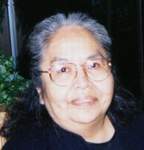
Florence was 59 years old and was born and raised in Juneau, Alaska (a community of about 5,000 people when she was little.) Although there was a public school in Juneau Florence attended St. Ann’s Catholic School through third grade when she was allowed to attend the public school. She graduated from Juneau-Douglas High School and attended two years of college at Alaska Methodist University (now Alaska Pacific University) in Anchorage.
Her family lived on Douglas Island on Mark’s Trail (named for the logging trail up the mountain and her family property.) Florence was the fifth generation to still live on Mark’s Trail. The Indian Allotment Legislation providing for Indian title to land occupied and in use by Native Americans, was passed long after the legislation which allowed White newcomers to Alaska to gain title to land through mining or homestead claims, despite Native use and occupancy, and in violation of the terms of the Treaty of Purchase from Russia. Florence’s family was able to salvage 2.61 acres and three generations live there now. Douglas was connected to Juneau by a bridge that spanned the Gastineau Channel. Tlingit was the language spoken in her home and she was raised in the Penticostal faith. Her mother was born in Yakutat and her father was born in Juneau. Florence’s family was large with ten brothers and five sisters. Of the daughters, she was the middle one.
Florence was married and had five children, all grown. She was a member of Alaska Native Sisterhood Camp 2 for 36 years holding all positions from delegate to president. She taught Tlingit in the Juneau School District (a Tlingit and Haida immersion program) to seventh graders for many years. She was the only certified Tlingit teacher in Juneau and two nights a week taught an adult education Tlingit class. Florence taught Tlingit singing and dancing to the Marks Trail Dancers. She was an artist who taught beadwork in her spare time.
Florence considered her health "fair" and spent 70% of her time on behalf of the Tlingit/Haida people.
Raven Moiety
L’eineidi (Dog Salmon) Clan, Aan X’aak Hit (Center House)
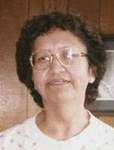
Ruth was born in Angoon with a population of less than 500 people. When interviewed, she was 61 years old. Ruth attended Mt. Edgecumbe Boarding School. Tlingit and English were spoken in her home. Both her parents were from Angoon/Killisnoo. Ruth came from a large family with three brothers and four sisters. Of the sisters, Ruth was the middle sister. They were raised in the Presbyterian faith.
Ruth was a board member of Kootznoowoo village corporation; a trustee for Kootznoowoo Permanent Fund; a member of the Anchorage Equal Rights Commission, held various positions with the Anchorage Tlingit and Haida Indian Tribes of Alaska, Vice President of Central Council Tlingit and Haida Indian Tribes of Alaska, including four years on the Executive Committee; the Alaska Federation of Natives Human Resources, Legislative and Education Committees; Anchorage Equal Rights Commission; Anchorage Native Caucus; and a member of the Alaska Native Brotherhood, Camp 87, serving in many capacities.
Ruth was divorced and had one son and a grandson. She retired from the Alaska Court System several years ago. She took college classes but did not have a college degree. Much of her time was devoted to teaching Native dancing, beading and making Tlingit dolls. Ruth marked her health as fair, and spent 50% of her time on Tlingit/Haida issues and Alaska Native politics.
Raven Moiety
Kiks.adi Clan, Gagaan Hit (Sun House)
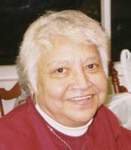
Bea was 62 years old when interviewed. She died of heart failure on February 12, 1998 at Alaska Native Medical Center in Anchorage. She was born in Hoonah, Alaska and attended Mt. Edgecumbe Boarding School. Bea obtained her GED in Anchorage in 1968. She was divorced and had one daughter and three sons.
Bea’s family moved from Hoonah (population less than 500) to Juneau after she had completed third grade. Her mother was from Sitka and her father from Hoonah. Bea was the oldest child in a family of four brothers and two sisters. Tlingit and English were spoken in the home. She was a lifelong member of the Russian Orthodox Church.
Bea worked as an office manager for the Anchorage school district, Alaska Native Foundation, and Community Enterprise Development Corporation before retiring in 1987. She had been involved in community and Native affairs since moving to Anchorage in 1959.
Bea was a past president and many times a delegate for the Anchorage Tlingit and Haida Indian Tribes of Alaska; held various offices in the Alaska Native Brotherhood, Camp 87; was a co-founder of the Anchorage Tlingit and Haida Dance Group; and a shareholder of Goldbelt Village Corporation and Sealaska Corporation.
Active in the Democratic Party, Bea was involved in local and statewide campaigns and encouraged Native involvement in voting. She helped develop programs such as the Minority Community Police Task Force, Alaska Native Concerns Mayoral Committee and Alaska Native Internship Program. She served on the boards of STAR (Standing Together Against Rape) and Municipality of Anchorage’s Human Rights Commission. She was also a guest speaker on Tlingit culture at elementary schools.
Bea had been ill the last two years of her life and wanted to enjoy her kids, grandchildren, and her extended family with what time she had left. She cut back on Tlingit/Haida and community issues and was concentrating on the time she had left for her family, grandchildren, and staying as well as she could. Previous to her illness it would be safe to say she spent 60% of her time volunteering on behalf of Tlingit/Haida people and Alaska Native issues.
Raven Moiety
L’eineidi (Dog Salmon) Clan, Yaxte Hit (Dipper House)
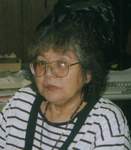
Harriet was 65 years old and was born and raised in Wrangell. The population while living there was around 1,000. She attended Mt. Edgecumbe Boarding school. Harriet was married and had four biological children and five adopted children. Her mother was Tlingit and very active in the Alaska Native Sisterhood, her father Japanese. English was spoken in the home. Harriet was the youngest daughter with three brothers and two sisters.
Her grandfathers, Chester Worthington and James C. Johnson were two of the thirteen founders of the Alaska Native Brotherhood in 1912.
Harriet held a variety of leadership positions spanning the last thirty-five years in the Alaska Native Sisterhood, Camp 87. Harriet was a member of the Anchorage Tlingit and Haida Indian Tribes of Alaska and had held positions from secretary to vice-president, including representing the Tribe as a delegate to the Central Council. She had been a member of the West High School Advisory Board Council, the Native Indian Education Association, National Congress of American Indians, Cook Inlet Native Association, and past president of the Johnson-O’Malley parent committee.
A homemaker and volunteer, Harriet obtained a Bachelor’s degree in Social Work. Harriet’s husband had Parkinson’s disease and much of her time was devoted to caring for him. Harriet considered herself to be in excellent health. She spent 40% of her time volunteering for Tlingit/Haida people and issues.
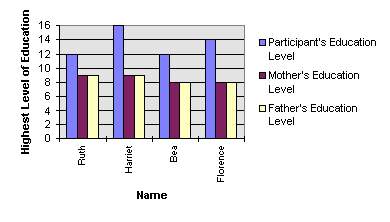
Figure 1. Educational level attained by participants and their parents.
Florence and Ruth were middle children, Bea was the eldest child; and Harriet the youngest child in their family.
Ruth, Harriet and Florence’s mothers were employed in seasonal cannery work. Bea and Florence’s fathers were fishermen, Ruth’s father was a machinist in the canneries and Harriet’s father was a cook.
Ruth, Bea and Florence’s mothers and fathers were Tlingit. Harriet’s mother was Tlingit and her father was Japanese. In the home of Ruth and Bea, Tlingit and English were spoken (although the parents spoke Tlingit between themselves and around the children spoke English.) Tlingit was the primary language in the home Florence. English was the language spoken in the home of Harriet.
Each participant was of a different Christian denomination. Bea was a life-long member of the Russian Orthodox Church, Florence belonged to the Pentecostal, Harriet belonged to the Salvation Army, and Ruth was a Presbyterian.
This section described and discussed the results of the interviews in terms of the four women’s origins of and motives for leadership, how are leaders identified, nurtured, and developed, and insights about the nature of shared leadership. Typical statements by the participants are provided in Italics throughout this section.
Few respondents explicitly stated motivation for leading. Instead, implicit motivators were woven throughout their stories, and several motivators were identified for each woman. The influence of family and extended family, mentors, innate traits, involvement with the Alaska Native Brotherhood, Alaska Native Sisterhood, and Tlingit and Haida Indian Tribes of Alaska, working for social change, and changing relationships mitigated their development.
Origins of and Motives for Leadership
All the respondents’ parents, (mother and father, mother or father), uncles, aunts, and grandparents were involved in the Alaska Native Brotherhood (ANB) and Alaska Native Sisterhood (ANS). For some, belonging, familiarity, wanting to be involved, and being "picked on" by White kids led to initiation into ANB and ANS. All respondents emerged to continue the work that others had started (leadership succession) (Astin & Leland, 1991).
1. Can you tell me of some early leadership experiences? Where and When? What did you do? What was your role?
To be around familiar people when I went home to Juneau from Mt. Edgecumbe. We were sent to Mt. Edgecumbe because we couldn’t go to public school and we stayed in a dorm with kids from all over Alaska. We formed a group, just Southeast girls, just to be together because the school was so big.
We wanted to be around familiar people when we went home to Juneau. We wanted to belong to ANB so we went to a meeting at the ANB Hall in Juneau. We walked in there and everybody was talking Tlingit. Everything that they were doing was in Tlingit and we didn’t understand what they were saying. We decided to start a junior ANB where we could do stuff, because we wanted to do something, we wanted to get involved.
We all worked together, it was always political, it was always, we want to be in the middle of what’s going on. We wanted to be able to help. ANB was always there in the political front and we just wanted to be part of that.
My dad was always involved in ANB but my mom wasn’t. She was always home and so I guess I take after my dad’s side, his curiosity and wanting to get involved and do something.
My first experience was joining the Alaska Native Sisterhood in Juneau. I attended the meetings with my husband who was involved with the Alaska Native Brotherhood and listening to people like Stella and Bob Martin who helped me with my growth.
Being the middle of sixteen children…lots of little brothers and sisters. Helping Mom with everything that had to be done, and when my Mom wasn’t there, I was the authority. At a very early stage I always had to be the one to tell somebody what to do.
Several women talked of opportunities that opened up for them and barriers were perceived as something that gave them strength and ultimately empowered them in all areas of their lives.
2. Have you personally experienced any opportunities or barriers on your journey through life? Can you describe some of them?
After my divorce, not really thinking about what my role would be in the community, (Juneau), Roger Lang called and said there was an opening on the Equal Rights Commission and would I be interested in becoming a commissioner. I submitted my application to the Mayor’s Office and Roger also called the Mayor in support of me. I was appointed to the commission so that was my first role in a leadership position
Because we were sent to Mt. Edgecumbe, I think that made a big difference in my learning process. Being around a lot of people, that helped. And growing up in Juneau, you were always defending yourself because you were Tlingit and the white kids were calling you Tlingits and making fun of your relatives. We had to stick together so the white kids wouldn’t overpower us and pick on us.
It was a lot of banding together—so the opportunities—it just made it easier to communicate with other people.
I felt education was a barrier to us when we were younger. There wasn’t help at home because they didn’t understand themselves what they wanted us to be educated to.
Yeah, I was called "Dirty Jap" and "Dirty Indian." I’ve experienced prejudice as a Native woman and treated like we don’t know much. Actually, I was ninth in a class of sixty-three in high school and in my college years I had a GPA of 2.97.
I don’t remember my studies, I don’t remember what we studied, what I remember is at school being hit for speaking my language. My brother and I were punished and separated for speaking our language. But yet, when some children that were Tlingit speakers that came from out of town, the sisters could not understand them, so they would come and get me to interpret for them. I often wondered how come it was okay for me to talk it when the nuns wanted it but when I wanted it, I got punished for it. I’m very fortunate that I had a mother and grandmother that felt so strongly about Tlingit.
By focusing on the networks and support systems developed and used by Tlingit leaders, and by looking at the process of empowerment, the respondents provided insights about the nature of shared leadership.
3. Who are the three most important people in your life? Why?
The first would be Roger Lang. Stella and Bob Martin taught me the Roberts Rules of Order and how to conduct meetings. Another would be Ivan Gambell who was president of Kootznoowoo our village corporation. People on the board thought of me as an outsider not living in Angoon and I’d get discouraged but Ivan said I came to the meetings with fresh ideas and he would boost me back up to where I needed to be.
Mama, if it wasn’t for her sacrifice we wouldn’t be here. I wouldn’t be here to talk about what I’ve accomplished in my life because of her direction. She used to talk while she was teaching telling me what was expected of me.
Hilda Hope, president of Alaska Native Sisterhood in Anchorage. She was a very strong lady that believed in educating the people she came in contact with about ANS. I was fortunate to have her for a friend. There were a lot of things I learned from her when I lived up there in Anchorage.
In 1974 I was president of ANS in Anchorage and went to a convention held in Hydaburg. I was so proud of how the convention and our people conducted conventions. That convention motivated me to move forward to continue to work to regain the culture and still be able to incorporate it together with the white man’s society. One of the ladies I met there was Mary Jones. She is my role model. Everytime I saw her speak, there was such a unique quality about her, a quiet authoritative way she had that people wanted to listen to her and do the things that she suggested. When we lose her we will be losing one of our real assets for our Tlingit and Haida people.
My father was my role model.
My dad for being the political person in my life has been a big inspiration.
The other person would be my grandmother. She didn’t understand English and we used to go with her to sell her moccasins in Juneau when the big boats came in. She would sit there all day long and just sew, sew, sew. We would talk to the tourists and answer their questions.
She never had to talk to you, she could just look at you and you knew whether you were doing something right or wrong. She was just a real strong lady.
My grandmother, mother, and my other grandma Benson were on the executive council for the Alaska Native Sisterhood and Brotherhood. Because the men were out fishing, those women were in a political arena and they had to take care of business.
My idol is Byron Mallott. I have always been impressed with the way Byron came into the political world when we were still struggling with Tlingit and Haida and Alaska Native Brotherhood and Sisterhood. Byron talked from his heart. It was his feelings and what he fought for. Byron expressed himself in a way the older people were feeling. He was always meeting with the older people and listened to them. He got the people working for a goal. He was there to help them through things and I try to do that.
Participant Definitions of Leadership
4. How do you define leadership and what do you consider the traits of a leader?
A good leader listens as well as works hard.
A lot of our elders were not educated that much but they were good speakers. People listened to them and heard what they said. Their leadership has brought us to where we are now. They never feared to get up and say what they felt and never got into big arguments. Not to bring the personal into business, stay focused on the issues.
Good listening and organizational skills, empathy, compassion, dedication to helping others and commitment.
To me, life is a never-ending education process. No matter how much schooling you may have had, no matter how much you have done, there is always something there for someone else to teach you-leaders can do that.
The Woman or Man Who Embodies the Term "Leader"
5. In your lifetime, what woman or man most fully embodies the term "leader" and why?
Shirley Kendall who has given so many years of service to teaching the Tlingit culture and language.
Marlene Johnson who was chairman of Sealaska Corporation for years and Byron Mallott, I still think of him as one of our best leaders. Both of them formed the advisory committee and Marlene really worked for the advisory committee to see that we were operating like we should be and then she became chairman of the Sealaska Board. I just sat in awe watching the way she worked that board.
Certainly everybody thinks of Elizabeth Peratrovich. She was just a real family person. When we used to know her she was always baking cookies for her kids and we’d go out there and she would give us stuff. The courage it must have taken for Elizabeth to get up in front of all those men in the territorial legislature to speak up for our rights is unbelievable. Her dedication and feelings for the people—not herself, but for the people and kids—will never be forgotten. She represented the Sisterhood and Alaska Natives and is an inspiration.
The strength of my mother, she never would let you know that she was hurting. She was always considerate of other people. My mother really played an influential role in the way that I did things when I was growing up.
The next generation of women leaders like Debbie Call, she’s just always there for you. It’s good to see the younger women getting involved so you know that nothing is going to get lost. They will carry the causes on.
6. If you could put just one item on a list of issues or concerns which need to be addressed on behalf of Tlingit/Haida people in the next 5-10 years, what would that item be? Are these personal goals or what you think society needs to do?
Preservation of the Tlingit culture and language.
We need to remember what Betty (Elizabeth) Peratrovich did for all of us. She worked so hard for all of us to be able to attend white schools, be able to go into restaurants and theatres. If it weren't for her work we’d still have the signs up "No Indians or dogs allowed."
We need to teach our children that there can be a balance in the two worlds. That they can be Tlingit and still be successful.
Most young people know nothing about respect. We have lost the respect of our younger children and need to tell the stories that teach them their place in our society.
Preserving our culture and heritage so we don’t lose our identity as native people and so our kids will learn their history and know who their family is. How do you bring people together with the younger people to accomplish that? How can we work together to accomplish that? As we learn more about our culture, we’ll learn more about who we are, we’ll learn about keeping in touch with our relatives and going back to find out who we are and respecting and being proud of our lineage – identification that leads to self-esteem.
Helping young people and reducing suicide among our people and the addictions that go along with that. Employment and helping the homeless.
7. At this point in your life, what is your highest priority, or your primary concern?
We need to teach our children the dance and songs. By working together we should be able to come up with programs that would bring back our language, culture, and traditions.
To continue working with and for Native people. A lot of my efforts and energy goes towards the Tlingit and Haida annual Christmas party. I continue to volunteer in other areas.
My health so I can enjoy my kids and my grandchildren. Not being able to take care of myself, not driving, not getting out of bed, not doing anything, it was a hardship on everybody.
My political side is kind of waning and it is time for the younger kids to take over. I still feel we have to be there to help and guide them. We have to be there, to be a safety net for those guys. They are the ones that are going to take over so I need to concentrate on my health.
We need to educate the children in the old ways of life. It would be great to have a Tlingit school for the kids, as education needs to be done on a daily basis. One of the first things you hear at meetings is that we need to preserve our language. I could run a school, hire the people to do the things that I do now. I already have a rough draft curriculum of everything I want to do. We have all the resources, my brothers, and my sisters. All right there.
Getting out the Native vote. It took a lot of my time and it is very tiring but worth it.
Teaching the dance group.
We are role models and need to stay involved in Alaska Native Brotherhood and Sisterhood, Tlingit and Haida, and the Tlingit and Haida dance group. We can continue to encourage the younger kids, if it is not important to us it won’t be to them.
Self-Identification as Leaders
Astin and Leland (1991) believed that to expand our understanding of leadership, we must ask what the goal of leadership is, study the nature of collective leadership, and redefine leadership beyond position.
8. How did you learn about leadership or yourself as a woman?
As a teenager, my mother, who was crippled with arthritis, was the local Alaska Native Sisterhood president. I watched her work in that role and marveled at it. One time I was nominated for secretary when she was running for president and she sat me down and said, "no way are you going to run for secretary." She said, "you withdraw." I said, "but why? I’d like to work with you." She said, "this is my position, you really need to learn your own position."
It goes back to Alaska Native Brotherhood again. Just being trained to be involved with what ANB was doing. We didn’t have Tlingit and Haida then. The only political arena we had was the ANB and ANS. The ANB and ANS gave us something to do and be recognized for. Other people had the same kinds of concerns that we did. We just tried to stick together.
Even after moving to Anchorage I was always involved in the kids schools. Much of my time was spent on community and Native affairs but I was always home for my kids until my youngest was in sixth grade. Even then I’d rush home, make dinner, and go back out for meetings. I tried to bring them up like the TV families.
One of the first things taught to us was that we have to be strong…respecting yourself, what you think about yourself is important.
If you stand back and not say anything that you see is going on that means you condone and what is happening is okay with you, you become a part of it. Leaders don’t do that.
Extend a helping hand to let your people know that you are there. Maybe by showing that caring hand, the person’s eyes will be opened and they will know someone cares about them.
The Sisterhood…became the backbone of the Brotherhood. The Sisterhood was always there, baking and raising money for those guys and those guys were doing all the political…and all and that’s what intrigued me. I didn’t want to be back there cooking. I wanted to be there with them talking about the issues. But that doesn’t mean the women that were there were not strong leaders. They definitely were in the way they carried out traditions and how they carried the family through a lot of things. How they had to preserve everything and how they knew the seasons. Everything they did was for their families so they could survive the hard winters. The Sisterhood was there to help the young mothers get through the hard times.
You know, we didn’t have Dr. Spock. We didn’t have all those other books. We only had our mothers, our grandmothers who went through all those things that helped us learn about our world and how to navigate through all the changes and attitudes. That is why I marvel so much at what the women have done…the Sisterhood. I know there’s a lot of women that didn’t always belong to the Sisterhood but the Sisterhood took care of the cleaning to help them. They raised them.
You know, you can’t tell someone, "You have to respect me." You have to show it by example.
We come from a very strong heritage. Not all of us know what our grandfathers or uncles and aunts and all those people did but they did something because we are here.
Traditional Beliefs versus Religious Beliefs
9. Is there any conflict between your traditional beliefs and the faith that you have now and if there is, how have you worked through that?
Our song and dance is our own and the church is by itself and there is no conflict between the two. I think you can work both of them and be happy.
My faith is not really a church one. My faith is more in the basic goodness of people.
I don’t go to church but an auntie taught us that no matter where you are at, no matter who you are with or talking to, he’s there with you all the time. He’s there listening to you and all you have to do is reach and say, "I need your help."
I don’t see any conflicts. Priests have gone to potlucks and all kinds of stuff that the Native people have done. Not in my church.
This study sought to integrate the perspective of Tlingit women in traditional culture and explored the impact of Western cultures on that status. It then examined the formulation of the Alaska Native Brotherhood and the Alaska Native Sisterhood, the first organizations in Alaska to address Alaska Native civil rights and education. Finally, the research focused on the values and personal dynamics that shaped these four women’s commitment to involvement in leadership activities, and what outcomes they ultimately experienced.
The researcher interviewed four women—all involved since they were young women in the resurgence of traditional culture among the Tlingit and Haida people. The study found some priorities common to all included improved education, strengthening of the family, economic development, leadership development, employment opportunities as well as a desire to reaffirm the strength and value of their own cultures.
They all spoke of being alienated in the dominant society and began learning from their parent's involvement in Native issues through the Alaska Native Brotherhood (ANB) and Alaska Native Sisterhood (ANS) as a means of "fitting in" and being accepted by their communities. It was comfortable to "be in the majority" They cultivated a series of mentors to guide them in the intricacies of the ANB and ANS and acquired leadership skills early in life. They recounted their family histories and reflected on experiences, which influenced their development of voice and cultural identity.
What they learned as girls growing up at home was that women have complimentary and overlapping roles in the family and community. Their mothers, fathers, grandparents, aunties, uncles, were all respected and outspoken members of their families and communities. Their fathers or male role models (brothers, uncles) that influenced them, respected and supported the strength of the women in their families and the roles they took on within the family and the community.
As children, the participants learned to respect and admire the leadership they saw in the Alaska Native Brotherhood and Alaska Native Sisterhood and wanted to learn from those leaders. The parenting, oral traditions, storytelling, and advocating taught them early in life about knowing, doing and being in the world they lived in.
The women recognized at a young age that life was about cultural and spiritual differences, education, politics, power, and ultimately, about the land, resources, and economics of their people.
Common themes that emerged in the narratives of the women in this study were responsibility, reciprocity, community, continuity, and respect. Those words were the guidelines with which the women maintained strength, integrity, and always humor.
Florence felt the forced separation from the dominant community brought her large family closer together. She grew up with the Tlingit language and culture but worked well in the dominant society.
Over the last twenty years, there has been an increased interest in the anthropological study of women and a growing field of feminist scholarship within anthropology. These scholars criticized the traditional study of anthropology because women were left out of focus in the academic tradition. Feminist scholars felt it was their task to uncover, observe, record, and interpret the ethnohistory and culture of women as well as to reinterpret traditional assumptions on the development of leadership.
CONCLUSIONS AND RECOMMENDATIONS
|
Intangible |
Andrew Hope III (1999) Alaska Native Writers, Storytellers & Orators
Feminist anthropologists asserted that anthropological studies must include analysis of the social roles, experiences, values, and attitudes of both women and the men in a culture. It was not necessary, however, to devalue or ignore the role of men in order to set the record straight about women. Although the traditional economic roles of Tlingit men and women were not identical, their roles were interdependent and equivalent. It was the economic partnership between the women and men that ensured the welfare of their communities. Both could acquire wealth and had access to political influence as a result of wealth. Women were active and influential participants in traditional Tlingit political life.
All the participants in this study talked of how they felt isolated from the mainstream (white) culture and yearned to belong to a community. Their parents spoke Tlingit but not with their children. They were sent away to Mt. Edgecumbe boarding school for high school and that school became their community. Initially, they formed a group of Southeast girls for that sense of belonging. They banded together for strength and security. That strength made it easier to communicate with other people. There were Native students from throughout Alaska at Mt. Edgecumbe enabling the participants to expand their worldview at a very early age. During that time in Alaska the radio was inaccessible in most of Alaska. Television did not become available to Alaskans until the late 1950s and even then only to the bigger towns like Anchorage, Fairbanks, Juneau, and Ketchikan.
Mt. Edgecumbe proved to be the training ground for future Native leaders who would help to shape not only educational policy in Alaska, but also State and Federal policy concerning all aspects of Native life for generations to come. Mt. Edgecumbe was the only high school in Alaska that taught Alaska Native History accurately so Native students who graduated from Mt. Edgecumbe knew the valuable history and could honor the past.
The parents and relatives of the participants spent quality time with the family. They had a subsistence lifestyle fishing, hunting, drying fish, picking berries, putting up and preserving foods for the hard winters. They also worked in the canneries during the summer months. That meant that the family was together all winter, allowing fathers to spend more time with their sons and their daughters. Tlingit fathers were responsible for family, not only as a "breadwinner" but also as a teacher of traditions, trade, and storytelling. Each one of the participants talked about how much their fathers’ meant to them. Their fathers’ did not discourage them from becoming political or taking leadership roles. The mothers and grandmothers were important role models and the mother-daughter relationship was a source of strength to the participants. They recognized that their mothers had a voice in the family, and that their parents were also supportive of their daughter’s voice.
The participants discussed many other Tlingit and Haida women they respected and admired. When they themselves were young and learning, those female role models and mentors provided support, encouragement, voice, instruction, skills, and competencies for their future roles as Tlingit leaders.
All the participants talked of not fitting in, wanting to be involved, wanting to be around familiar people, and being a part of the majority. The Alaska Native Brotherhood (ANB) and Alaska Native Sisterhood (ANS) gave them something to do and be recognized for. They all had the same kinds of concerns. Their parents talked Tlingit and only one of the participants' parents talked Tlingit in the home to their children. Tlingit was still spoken at the ANB and ANS meetings so the young people formed a junior ANB and ANS.
They grew up having to defend themselves not only against the white kids who called them names and made fun of their relatives but also the grade schools they attended. The participants experienced silencing forces in the elementary schools and negative attitudes towards Tlingits. Florence was punished for speaking Tlingit but when new Native students arrived at school who knew only Tlingit, the nuns called on Florence to translate for them. They all felt education was a barrier to them as their family was not able to guide them in their educational goals. This gave them a shared experience in that they knew they did not want their own children to contend with the same barriers. They learned to speak out much earlier than many other young women.
Tlingit Preservation of Language and Culture
Every participant talked at length about the preservation of Tlingit language, dance, and culture. They felt strongly the need to teach the younger generations the culture, language, dance, traditions, and history of the Tlingit people. They each discussed the need to teach their children and grandchildren to be proud of their heritage -- there could be a balance in the two worlds they lived in. That they could be Tlingit and still be successful.
The Tlingit culture recognized the importance of women in society. Native culture had always appreciated and respected strong women so a Tlingit woman asserting herself was not new or threatening to the men or other women. That was why the Alaska Native Sisterhood was such a strong organization.
The Alaska Native Brotherhood (ANB) and Alaska Native Sisterhood (ANS) remained the single vital political force for Alaska Natives through the 1940s. Through its organizational efforts, the ANB and ANS had unified clans, communities, and the Tlingit and Haida people. The ANB and ANS provided a safe environment for personal and group initiative, creativity in ideas, and an understanding of their history and its influence on them, including cultural and educational experiences. The ANB and ANS reversed its original position against the practice of aboriginal traditions in the late 1960s and became a leading force in the resurgence of traditional culture among the Tlingit and Haida and these women had worked tirelessly in that arena. Tlingit women remained active in the economic and political spheres of their community as they were traditionally. They provided a stable income for their family, participated in local politics, represented the community in regional, state, and federal meetings.
All the participants talked about leadership as service – understanding what is right and wrong and doing something about it. The work of leadership was shared work, change oriented, a values based activity, and not positional (not the same thing as authority). They talked about the youth, education, and collaboration, accepting responsibility, defending their issues publicly and being willing to act on them. Leaders do not wield power. They hold responsibility in a sacred trust with the people.
Another purpose of the study was to acknowledge the voices and issues of Tlingit women. Through their early involvement with the Alaska Native Brotherhood and Alaska Native Sisterhood, the participants gained independence, choice, voice, access to new worlds and relationships. Women had always formed the backbone of indigenous nations on this continent. This heritage informed and guided generations of Native women and men.
The study generated topics for further research on Native ways of knowing, leadership models, accuracy of histories, education, assumed power, social movements, and women’s’ voices. Leadership succession has generally been ignored and further studies that look at leaders of social movements are needed.
The values of inclusion and connection instilled by the Tlingit culture and carried forward in the Alaska Native Brotherhood and Alaska Native Sisterhood were valuable leadership qualities that corporate America could benefit from studying and incorporating in their businesses.
With the addition of a new library at the University of Alaska Anchorage, a section specific to Alaska Native literature would be a valuable addition. Most research and writing on Alaska Natives has been from the white male perspective. In turn, those men trained female anthropologists. A place where community and students would have easy access to information, stories, and oral histories written and translated correctly by Alaska Natives is needed. This would help all Alaskans’ understand the issues that have divided Alaska so deeply. Understanding and valuing the history of the Alaska Natives is critical to change perceptions held by the general population.
Alaska Native and Indian history through their own eyes is still the exception to the rule. There is a need to write women into traditional Alaska history from earliest times to the present. Women’s contribution and work they have done is invisible—they were essential to indigenous societies and an integral part of those societies.
The First Americans are the last Americans in higher education. Trained and qualified Alaska Native educators are essential to the future success of Native students. Alaska Natives represent 16% of the population in Alaska but role models are missing from schools. Native educators would offer leadership and examples of cultural pride to students.
Curricula used in post-secondary institutions lacks culturally relevant and meaningful learning opportunities for Alaska Natives. Too often, curricula ignore the learning styles of students.
Institutions of higher learning need to change into places where Native people can pursue their educational goals while keeping their cultural identities intact. Institutional barriers such as racism, financial aid, curricula, content/teaching strategies, communication, and environment lead to many students leaving school. Few Alaska Natives are involved in higher education so there is only a small voice in college affairs.
Discussions on cultural diversity at the University of Alaska Anchorage have been ongoing for over a decade but the institution has not made cultural diversity a priority. Traditional Alaska Native education needs to be documented and incorporated into a cultural diversity awareness class that all new employees within the University system would be required to take.
Implications for Future Generations
Develop multicultural educational materials to raise awareness of indigenous peoples and human rights. Cross-cultural understanding is critical to building better relationships. Many Alaska Natives feel alienated and left out of decisions that affect their daily lives.
Encourage the Adult Education Program to be more flexible and incorporate the option for an oral thesis.
The University of Alaska Anchorage has one of the largest Alaska Native and American Indian student populations in the United States, excluding Tribal Colleges. The University could utilize a wonderful natural resource here in our State and build an Indigenous Center that would draw people from throughout the world. Anchorage is the largest Native village in the State.
Where language and naming are power, silence is oppression, is violence. Adrienne Rich (1977) Conditions for Work: The Common Work of Women
Arnold, R. (1978). Alaska Native land claims. Anchorage: Alaska Native Foundation.
Astin, H., & Leland, C. (1991). Women of influence, women of vision. San Francisco: Jossey-Bass.
Bataille, G., & Sands, K. (1984). American Indian women telling their lives. Lincoln: University of Nebraska.
Billing, Y., & Alvesson, M. (1989). Four ways of looking at women and leadership Scandinavian Journal of Management, 5 (1), 63-80.
Blackmore, J. (1989). Changes from within: Feminist educators and administrative leadership. Peabody Journal of Education, 66 (3) (Spring), 19-40. (ERIC No. EJ 435073).
Brookfield, S. D. (1997). Assessing critical thinking. In A. Rose & M. Leahy (Ed.), Assessing adult learning in diverse settings: Current issues and approaches, (pp. 17-29). New directions for adult and continuing education, 75, San Francisco: Jossey-Bass
Caffarella, R. S. (1992). Psychosocial development of women: Linkages to teaching and leadership in adult education. ERIC Clearinghouse on Adult, Career, and Vocational Education, Columbus: Ohio State University
Case, D. (1984). Alaska Natives and American laws. Fairbanks: University of Alaska Press.
Chevigny, H. (1944). Lord of Alaska: Baranov and the Russian adventure. New York. Viking
Clark, M. C. (1993). Transformational learning. In S. B. Merriam (Ed.), An update on adult learning theory (pp. 47-56). New directions for adult and continuing education, 57. San Francisco: Jossey-Bass.
Coyhis, D. (1993). Servant leadership. Winds of Change. (Spring), 23-24.
Culley, C. (1970). Alaska: Past and present. (3rd ed.), Portland: Binford and Mort.
Dauenhauer, R. (1980). Glacier Bay concerto. Anchorage: Alaska Pacific University.
Dauenhauer, N., & Dauenhauer, R. (1994). Haa kusteeyi our culture Tlingit life stories. Seattle: University of Washington.
Davis, M. L. (1931). We are Alaskans. Boston: W. A. Wilde Company.
De Laguna, F. (1972). Under mount Saint Elias: The history and culture of the Yakutat Tlingit. 1-3. Washington D. C.: Smithsonian Institution Press.
De Laguna, F. (1990). Tlingit in Handbook of North American Indians, 7. William Sturtevant, ed. Washington: Smithsonian Institution.
Dewey, J. (1916). Democracy and education. New York. Macmillan.
Drucker, P. (1958). The Native brotherhoods: Modern Organizations on the northwest coast. Smithsonian Institution, Bureau of American Ethnology. Bulletin 168. Washington, D.C.: United States Government Printing Office.
Estus, J., & Choate, G. (1983). Curry-Weissbrodt Papers of the Tlingit-Haida Tribes of Alaska: An Inventory. Juneau: Central Council of the Tlingit-Haida Tribes of Alaska.
Fisher, D. (Ed.). (1980). The third woman: Minority women writers of the United States. Boston: Mifflin.
Freeman, J. (1975). The politics of women’s liberation. New York: Longman.
Freire, P. (1993). Pedagogy of the oppressed. (rev. ed.) New York: Continuum.
Fuchs, E., & Havighurst, R. (Ed.). (1973). To live on this earth: American Indian education. New York: Doubleday.
Gruening, E. (1954). The state of Alaska. New York: Random House.
Gunn Allen, P. (1986). The sacred hoop recovering the feminine in American Indian traditions. Boston: Beacon Press.
Haycox, S. (1986-87). William Paul Sr., and the Alaska voters’ literacy act of 1925. Alaska History, 2 (Winter), 17-37.
Haycox, S. (1989). Alaska Native brotherhood conventions: Sites and grand officers, 1912-1959. Alaska History, 4 (Fall), 39-46.
Haycox, S. (1989). Racism, Indians, and territorial politics. In interpreting Alaska’s history: An anthology. Anchorage: Alaska Pacific University.
Helgesen, S. (1995). The Web of inclusion. New York: Doubleday.
Helgesen, S. (1990). The female advantage: Women’s ways of leadership. New York: Doubleday Currency.
Henriksson, M. (1984). The Indian on capitol hill: Indian legislation and the United States Congress, 1862-1907. Helsinki: University of Helsinki.
Hinckley, T. (1972). The Americanization of Alaska, 1867-1897. Palo Alto: Pacific Books.
Hollander, E. (1985). Leadership and power. In G. Lindzey and E. Aronson (eds.), Handbook of social psychology. New York: Random House.
Iannello, K. (1992). Decisions without hierarchy. New York: Routledge.
Jackson, S. (1880). Alaska, and missions of the north pacific coast. New York: Dodd, Mead & Company.
Jaimes, M. A., & Halsey, T. (1992). The State of Native America. Boston: South End Press.
Kan, S. (1985). Russian Orthodox brotherhoods among the Tlingit: Missionary goals and native response. Ethnohistory, 32,196-223.
Klein, L. (1975). Tlingit women and town politics. Ph.D. dissertation, Anthropology Department, NewYork University.
Klein, L. (1980). Contending with colonization: Tlingit men and women in change in women and colonization: Anthropological Perspectives. Etienne and Leacock, eds. New York: Preager.
Knowles, M. (1975). Self-directed learning. Chicago: Follett.
Knowles, M. S., and Associates (1984). Andragogy in action: Applying modern principles of adult learning. San Francisco: Jossey-Bass.
Kottak, C. P. (1991). Cultural anthropology, (5th ed.). New York: McGraw Hill, Inc.
Kotter, J. P. (1988). The leadership factor. New York: Free Press.
Kouzes, J., & Posner, B. (1995). The leadership challenge. San Francisco: Jossey-Bass.
Krause, A. (1956). The Tlingit Indians. Translated by Erna Gunther. Seattle: University of Washington Press. Subsequent paperback reprintings. First published in German in 1885.
Langdon, S. J. (1993). The Native people of Alaska. (3rd ed.). Anchorage: Greatland Graphics.
Lowry, C. (1989). Supporting and facilitating self-directed learning. ERIC Digest No. 93 Columbus, OH: ERIC Clearinghouse on Adult, Career, and Vocational Education.
Mantz, A. A. (1953). A study of secondary and higher education in Alaska. Unpublished doctoral dissertation, University of Southern California.
Mezirow, J. (1990). How critical reflection triggers transformative learning. In J. Mezirow & Associates, Fostering critical reflection in adulthood: A guide to transformative and emancipatory learning (pp.1-20). San Francisco: Jossey-Bass.
Mezirow, J. (1991). Transformative dimensions of adult learning. San Francisco: Jossey-Bass
Mitchell, D. C. (1997). Sold American. Hanover, NH: University Press of New England.
Morgan, L. (1979). Alaska’s Native People. Alaska Geographic Society, 6,(3), 286-87.
Naske, C. (1973). An interpretative history of Alaskan statehood. Anchorage: Alaska Northwest Publishing.
Nichols, R. (1986). The American Indian: Past and present. New York: Alfred Knopf.
Oberg, K. (1973). The social economy of the Tlingit Indians. (1937 doctoral dissertation, University of Chicago.) Seattle: University of Washington Press.
Oleksa, M. (1991). Alaska Native women leaders, pre-statehood. Juneau: Alaska Department of Eduction.
Oshana, M., (1981). Native american women in westerns: Reality and myth. Frontiers: A Journal of Women’s Studies, 6, Fall.
Paddock Nickols, J. (1924). Alaska: A history of its administrations, explorations, and industrial development during the first half century under the rule of the United States. Cleveland: Arthur H.Clark Company.
Randolph, S. (1993). Examining gender equality in traditional and contemporary Tlingit culture. Master’s thesis, Alaska Pacific University, Anchorage.
Ray, C. (1959). A program of education for Alaska Natives. Fairbanks. University of Alaska Fairbanks.
Rich, Adrienne (1977). Conditions for work: The common work of women. New York: Pantheon.
Senge, P. (1990a). The fifth discipline: The art and practice of the learning organization. New York: Doubleday.
Shakeshaft, C. (1989). Women in educational administration, updated edition. Newbury Park, CA: Sage.
Siu, R. (1979). The craft of power. New York: John Wiley & Sons.
Spatz, R., Breinig, J., & Partnow, P. (1999). Alaska Native writers, storytellers & orators. Anchorage: University of Alaska Anchorage.
St. Pierre, M., & Long Soldier, T. (1995). Walking in the sacred manner. New York Touchstone.
Worl, R. (1990). A history of southeastern Alaska since 1867. Handbook of North American Indians, 7, 149-58. Edited by Wayne Suttles. Washington D. C.: Smithsonian Institution Press.
Young J. (1986). An examination of cognitive restructuring in an adult continuing education workshop. Ph.D. dissertation, Adult Education Department, Northern Illinois University.
Zander, A. (1990). Effective social action by community groups. San Francisco: Jossey-Bass.
PARTICIPANT PROFILE
Tlingit Women Leaders
|
1. Your name (please print): _________________________________________________ |
|
(Last)(First)
(Middle/Maiden)
|
| 2. Date of Birth _____/_____/____ |
|
Mo. Day Year
|
| 3. Place of Birth: ____________________________ |
|
City State
|
4. Community in which you spent most of your growing up years (circle one).
| Village ________________________________ 1 |
| Town of less than 500 population ____________ 2 |
| Town of more than 500 population____________ 3 |
| Town of 1, 000-5, 000 population ____________ 4 |
| Other, please explain ______________________ 5 |
5. How many times did your family move during your childhood years?
| None ____________________ 1 |
| Once ____________________ 2 |
| Twice ___________________ 3 |
| Three times _______________ 4 |
| Four times ________________ 5 |
| Five or more times __________ 6 |
6. What moiety are you from (circle one)? Eagle ____ 1 Raven____ 2
7. What clan do you belong to? _______________________________________________________
8. What House are you from? _________________________________________________________
9. What Tlingit/Haida name were you given? ____________________________________________
10. Do you speak your Native language (circle one)? Yes ___ 1 Some ____ 2 No ____ 3
11. What languages were spoken in your home when you were growing up? _____________________________________________________________________
12. Where did you attend elementary school? (Please specify)
| Hometown _______________________________________________ 1 |
| Boarding school: Name/Location _______________________________ 2 |
| Outside of Alaska: Name/Where: _______________________________ 3 |
| Other ____________________________________________________ 4 |
13. Where did you attend high school? (Please specify)
| Hometown ________________________________________________ 1 |
| Boarding school: Name/Location ________________________________ 2 |
| Outside of Alaska: Name/Location _______________________________ 3 |
| Other _____________________________________________________ 4 |
14. Highest level of education attainment (circle one).
|
Some high school ____________________________________________ 1 |
| High school graduate/GED _____________________________________ 2 |
| Some college _______________________________________________ 3 |
| Junior college _______________________________________________ 4 |
| College graduate _____________________________________________ 5 |
| Vocational/technical school _____________________________________ 6 |
15. Marital/Partner status (circle all that apply).
| Single (never married) ________ 1 |
Indicate Year
Below:
|
| Married ___________________ 2 |
______________
|
| Remarried__________________3 |
______________
|
| Separated __________________4 |
______________
|
| Divorced __________________ 5 |
______________
|
| Widowed __________________ 6 |
______________
|
| Intimate Partner______________ 7 |
______________
|
16. Children:
| Ages | Ages | |||
| Female | Adopted | ___ ___ ___ | Biological | ___ ___ ___ |
| ___ ___ ___ | ___ ___ ___ | |||
| Male | ___ ___ ___ | ___ ___ ___ | ||
| ___ ___ ___ | ___ ___ ___ | |||
| ___ ___ ___ | ___ ___ ___ |
17. Highest level of education attained by parents (circle one for each):
|
Mother
|
Father
|
| Grammar school _______________ 1 | 1 |
| Some high school_______________ 2 | 2 |
| High school graduate _____________ 3 | 3 |
| Some college or other training_______4 | 4 |
| College graduate ________________ 5 | 5 |
| Some graduate school____________ 6 | 6 |
| Graduate or professional degree______7 | 7 |
| Specify: ___________________________________ |
18. What was your father's principal occupation? Specify: _____________________________________________________________
19. Was your mother mployed while you were growing up (circle one)? No _______ 1 Yes _______ 2
20. If yes, what was most of your mother's employment (circle one): Part-time?___________ 1 Full-time?__________ 2
21. What was your mother's principal occupation? Specify:______________________________________________________________
22. Where were your parents born? Father __________________ Mother ___________________
23. Is your mother (circle all that apply):
| Tlingit _____________________________ 1 |
| Haida _____________________________ 2 |
| White or Anglo ______________________ 3 |
| Other _____________________________ 4 |
24. Is your father (circle all that apply):
| Tlingit _____________________________ 1 |
| Haida _____________________________ 2 |
| White or Anglo ______________________ 3 |
| Other _____________________________ 4 |
25. What is your birth order position (circle one)?
| First born and only _______________________________________ 1 |
| First born ______________________________________________ 2 |
| Second born ____________________________________________ 3 |
| Third or later born ________________________________________ 4 |
26. Number of siblings: Brother(s) ______ Sister(s) _______
27. What is your birth order position with your sisters?
| Oldest __________________________________________________ 1 |
| Middle __________________________________________________ 2 |
| Youngest ________________________________________________ 3 |
28. How would you consider your health at present?
| Poor ________________________________________________ 1 |
| Fair _________________________________________________ 2 |
| Good ________________________________________________ 3 |
| Excellent _____________________________________________ 4 |
29. Have you had any major illnesses (circle one)? No ________ 1 Yes _______ 2
30. If yes, please indicate the years of illness: __________________
31. To what extent have major illnesses or health factors of others (relative/partner) affected your life (circle one)?
| None _____________________________ 1 |
| Slight _____________________________ 2 |
| Moderate __________________________ 3 |
| Considerable _______________________ 4 |
| Great _____________________________ 5 |
32. Religious background/preference (circle one in each column):
|
Religion you
were raised in
|
Current religious
preference
|
| None ____________________________________ |
__________ 1
|
| Protestant _________________________________ |
__________ 2
|
| Catholic __________________________________ |
__________ 3
|
| Other ____________________________________ |
__________ 4
|
| Specify: __________________________________ |
__________ 5
|
33. What is your present occupation/position?
| Title/Rank | Name of Institution/Organization | Date |
| _________ | ____________________________ | _________ |
| _________ | ____________________________ | _________ |
34. List the professional and volunteer organizations in which you have served or are serving:
| Professional Organization Name | Years | Role/Title |
| ____________________________ | _____ | _________ |
| ____________________________ | _____ | _________ |
| ____________________________ | _____ | _________ |
| ____________________________ | _____ | _________ |
| ____________________________ | _____ | _________ |
| ____________________________ | _____ | _________ |
| Name of Volunteer Organization | Years | Role/Title |
| ____________________________ | _____ | _________ |
| ____________________________ | _____ | _________ |
| ____________________________ | _____ | _________ |
| ____________________________ | _____ | _________ |
| ____________________________ | _____ | _________ |
| ____________________________ | _____ |
35. Was there a mentor is your early years who may have assisted is the development of your leadership skills?
Yes _____ 1 No ______ 2
36. If yes, please name: _________________________________
37. How would you rate yourself on the following personal characteristics?
| Low | High | |||
| 1 | 2 | 3 | 4 | 5 |
| Humor | __________ |
| Creativity | __________ |
| Ambition | __________ |
| Self-confidence | __________ |
| Adaptability | __________ |
| Physical appearance | __________ |
| Independence | __________ |
| Risk-taking | __________ |
| Interpersonal skills | __________ |
| Energy | __________ |
| Self-discipline | __________ |
| Perseverence | __________ |
| Autonomy | __________ |
| Assertiveness | __________ |
| Intelligence/related aptitudes | __________ |
| Leadership | __________ |
| Tolerance | __________ |
| Compassion | __________ |
| Perceptiveness | __________ |
| Spontaneity | __________ |
| Self-centeredness | __________ |
| Achievement | __________ |
| Kindness | __________ |
| Self-awareness | __________ |
| Loyalty/commitment | __________ |
| Initiative | __________ |
| Resourcefulness | __________ |
| Curiosity | __________ |
| Patience | __________ |
| Generosity | __________ |
| Sociability | __________ |
| Loneliness | __________ |
| Spirituality | __________ |
|
Other: ______________________
|
__________ |
|
______________________
|
__________ |
|
______________________
|
__________ |
38. What are your current interests/hobbies/leisure or recreational activities? ________________________________________________________________________________________________________
________________________________________________________________________________________________________
39. List any artistic/musical talent:
________________________________________________________________________________________________________
________________________________________________________________________________________________________
40. What percent of your current volunteer or professional time do you spend on what you would consider primarily on behalf of Tlingit/Haida people?____ %
Please feel free to provide any additional information you wish in the space provided below:
THANK YOU FOR YOUR COOPERATION!
INTERVIEW QUESTIONS
Interview Questions
The following were questions asked of the participants. The researcher audiotaped all interviews. Although a prepared list of questions provided the basis for the interviews, participants were encouraged to introduce information they considered pertinent to provide richer and more complete data. Since the researcher personally knew the participants, conversations often began with questions about family members and mutual friends.
1. Can you tell me of some early leadership experiences? Where and when? What did you do? What was your role?
2. Have you personally experienced any opportunities or barriers on your journey through life? Can you describe some of them? (life story)
3. Who are the three most important people in your life? Why?
Who has been most helpful in your development as a leader?
4. How would you define leadership?
What do you consider the traits of a good leader?
5. In your lifetime, what woman (or man) most fully embodies the term "leader"? Why?
6. If you could put just one item on a list of issues or concerns which need to be addressed on behalf of Tlingit women in the next 5-10 years, what would that item be?
Are these personal goals or what you think society needs to do?
7. At this point in your life, what is your highest priority, or your primary concern?
8. How did you learn about leadership or yourself as a woman?
9. Is there any conflict between your traditional beliefs and the faith that you have now and if there is, how have you worked through that?
VITA
Barbara J. Fleek
|
EDUCATION |
|
University of Alaska B.A. in Psychology, 1991 University of Alaska M.Ed. in Adult Education, May 2000 |
|
PROFESSIONAL EXPERIENCE
|
|
University of Alaska Anchorage Director, Native Student Services, Anchorage, AK, 1997 - to present. Chugachmiut Career Development Coordinator, Employment and Training, Anchorage, AK, 1996/97. Bureau of Indian Affairs Realty Specialist/Probate Technician, Anchorage, AK, 1993/95. Alaska Airlines Flight Attendant, Seattle, WA, 1992/93. American Airlines Lead Agent, Anchorage, AK, 1986/91. |
|
ACCOMPLISHMENTS, PRESENTATIONS, AND AWARDS
|
|
Challenges & Cross-Cultural Issues in Village Administration, 2000. The History of Alaska Native Education, 1997 and 1999. Diversity Awareness Training, 1998. Tips for Overcoming Speech Anxiety and How to Become an Effective Public Speaker, 1997 and 1998. How to Organize Your Speech and Listening Skills for Public Speakers, 1997. Facilitator, Compass Institute, 1997. Assertiveness Training, Team Building, and Goal Setting, 1996. Fellow, National Graduate Indian Fellowship Program, 1995/96. |
|
AFFILIATIONS |
|
Municipality of Anchorage Census 2000 Complete Count Committee. Member, Anchorage Tribes of Tlingit and Haida Indians of Alaska. Member, Alaska Native Sisterhood, Camp 72. Indian Health Services Scholarship Program reviewer, 1999-2000. UAA Center for Human Development Advisory Board member. UAA Alaska Native Studies Council of Advisors, Ex-Officio member. Alaska Common Ground Committee member. |
Table 1. Traditional Indian Values vs. Non-Indian Values
Table 2. Examples of Organizational Belief Statement
Figure 1. Educational Level